

Welcome to Sunday Supper!
Set the Table
Say your grace
Prayer - Dear God, Help me to remember to celebrate. Amen.
Affirmation: I am free to celebrate.
Gratitude - I am grateful for celebrations.
I am grateful to every reader, subscriber, commenter, and anyone who shares this newsletter with others.
The Main Dish
Dig in
Reclaim Juneteenth
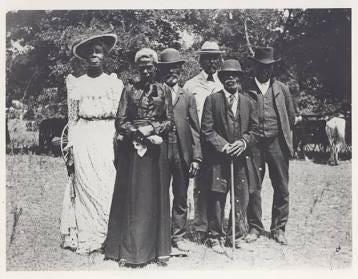
Wilmar, Arkansas, a small community of about 500 people, is home to one of the longest-running Juneteenth celebrations in the country. There, Juneteenth is referred to as the “June Dinner.” This name captures both the communal and historic nature of the celebration.
Every year, people from all over the country converge on this small town to celebrate family, love, and the emancipation of enslaved people in America. I attended many June Dinners, and now my children celebrate this tradition.
The smell of smoky barbecue, the rumbling sounds of motorcycles and blues, the weight of the thick Arkansas heat, a vibrant parade, and sprawling family reunions make up this yearly pilgrimage. I’ve celebrated June Dinner, even before I fully understood the profound meaning of the day.
The History of the Gap Between Law and Lived Reality
Slavery was the greatest human rights tragedy in the history of America. The physical and psychological trauma Black people experienced during this evil era is a reality that is difficult to imagine, and for some, hard to accept. A volatile mix of public policy, protests, bloody debates, and a devastating Civil War all had to take place to try to shift the trajectory of America and end legal slavery.
After hundreds of years of chattel slavery, Abraham Lincoln signed the Emancipation Proclamation on January 1, 1863. For some enslaved people in Texas, the news of their freedom did not arrive until June 19, 1865. This gap between the law granting freedom and the reality of continued enslavement lies at the heart of Juneteenth.
Legal chattel slavery ended, but the systemic marginalization of Black people in America morphed. A constant fight for true emancipation has ensued ever since.
Generations of Americans continue to experience the evil remnants of slavery, and those remnants continue to inform the perspectives and realities of millions of people.
After Emancipation, new laws that penalized the very existence of free Black people were enacted. States passed “Black Codes,” then Jim Crow laws, which were explicitly designed to criminalize movement, autonomy, and presence in spaces deemed “white.”
Today, the echoes of these systems are found in policies, executive orders, and the MAGA movement, which continue to shape belonging, citizenship, equal protection under the law, and the rights of minoritized people.
Juneteenth in 2026
Juneteenth lives in the gap between what the law says on paper and what a community experiences in reality. When Major General Gordon Granger went to Galveston, Texas, on June 19, 1865, he was enforcing the law that had been signed two and a half years earlier. For thirty months, a legal right existed in writing while Black people remained enslaved.
Unfortunately, the distance between a granted right and a realized right is not a relic of 1865. It is the exact structural hurdle that people face today.
The gap between legal rights and lived reality continues to appear in different forms. Whether in education, housing, voting access, policing, or the legal system, many Americans still experience a disconnect between formal protections and practical outcomes.
The law promises an impartial trial by a jury of “peers” and the right to defend oneself. Last week, when 19-year-old Karmelo Anthony was convicted of murder by "peers" in Texas, that gap between law and lived reality appeared once again.
This case began when another teenager didn’t want Anthony to sit under a tent at a track meet while it was raining, and he demanded that Anthony leave. A physical altercation ensued, and Anthony stabbed and killed the person who didn't want Anthony there. Anthony claimed self-defense, and the jury was left to decide his fate.
During the three hours of jury deliberation, the tension between the law and Anthony's right to seek shelter, defend himself, and be treated as an equal citizen rested in the hands of the jury.
Just as in 1865, the law remains something written by one group, applied to another, and endured by those whose very presence carries the presumption of guilt in the hearts of many.
One hundred and sixty-one years after General Granger landed in Galveston, Karmelo Anthony stood on that same Texas soil and was sentenced to 35 years in the Department of Corrections. He will experience another system that demands absolute control over his body.
Juneteenth was never a basic marker of freedom. To reclaim it now is to know the precise coordinates where one's right to exist, to breathe, or to seek shelter from a storm remains fragile and tenable, and then work towards liberation for all people.
Celebration
Today, Juneteenth is a time to reflect on American history, assess current social, economic, and political challenges, and work toward a future in which life, liberty, and the pursuit of happiness are realities for all people. Juneteenth reminds us that freedom and justice are not static milestones achieved by a federal holiday. They require continual work to ensure that all people can live with dignity, safety, and opportunity.
To celebrate Juneteenth, we can commit ourselves to causes that advance equity, foster belonging, and promote kindness. Celebration also means closing the gap and ensuring that rights promised on paper are realized in practice.
Each year, when families return to Wilmar for the June Dinner, they honor generations who endured the gap between promised freedom and lived freedom. The celebration itself is an act of remembrance, resilience, and reclamation. While gaps still exist, there is still hope.
Pot Likker and Cornbread Crumbs
There’s flavor in the small things.
Celebrate Juneteenth!
Table Talk
Join the Conversation
How does celebrating Juneteenth help preserve collective memory and pass history from one generation to the next?
Potluck
From Our Community Kitchen: Book, Music, Art, Substack
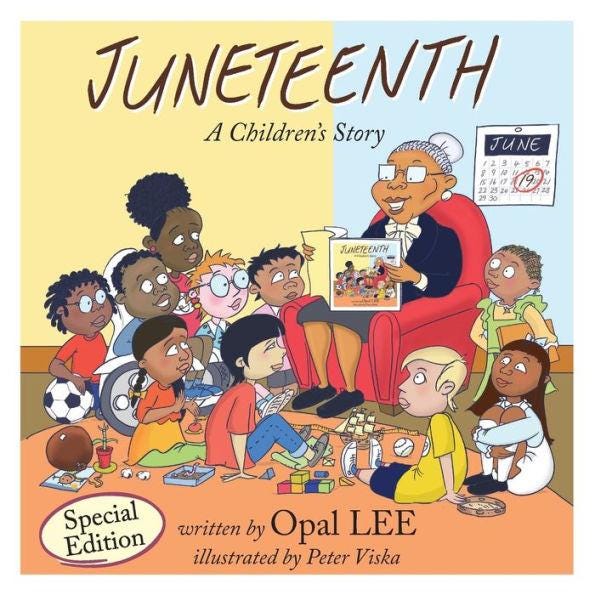
Book
Music
Art
Substack Recommendation

Recipe Exchange
Freedom and Food
My favorite dish at the June Dinner is barbecued goat! This is the only place I’ve ever eaten it!
In addition to goat, Juneteenth is connected to great food traditions. Check out this video to learn more about these traditions.
Dessert
A Sweet Send-Off
Third Weekend in June
Blues
Barbeque
&
Burnout
There’s nothing like June Dinner in Wilmar.
Family
Friends
&
Four Wheelers
There’s nothing like June Dinner in Wilmar.
Parade
Pageant
&
Popsicles
There’s nothing like June Dinner in Wilmar.
Vendors
Vacationers
&
Vibes
There’s nothing like June Dinner in Wilmar.
Car Show
Cards
&
Concerts
There’s nothing like June Dinner in Wilmar.
Seventh Street
Smiles
&
Struts
There’s nothing like June Dinner in Wilmar.
Reunions
Rims
&
Relationships
There’s nothing like June Dinner in Wilmar
Greater Shady Grove
Goat
&
Grounds
There’s nothing like June Dinner in Wilmar.
Heat
Horses
&
History
There’s nothing like June Dinner in Wilmar!
"Say that again for the people in the back!
Thank you for the history of June Dinner in Arkansas. Would love to attend one year but this year we will celebrate with attending a program by Sweet Honey in the Rock at the Academy Center of the Arts,
600 Main Street, Lynchburg, VA 24504 · (434) 846-8499
academycenter.org
There may still be seats available!!
Thanks for including their singing in this post❤️